Cervical Cancer Guide: Symptoms, Stages, Treatment & HPV Prevention
Cervical cancer is one of the few cancers that is highly preventable and curable if detected early. Yet, it still claims the lives of over 75,000 women in India each year, making it the second most common cancer among Indian women. Globally, the World Health Organization (WHO) reports over 600,000 new cases annually.
So why does cervical cancer continue to be such a threat? The answer lies in late diagnosis, stigma around reproductive health, and lack of awareness. At Genie Pads, we are committed to changing that because every woman deserves access to safe menstrual care, reliable health information, and life-saving prevention.
This guide will help you understand cervical cancer in detail: from its types and causes to symptoms, diagnosis, treatment, and most importantly, prevention.
What Is Cervical Cancer?
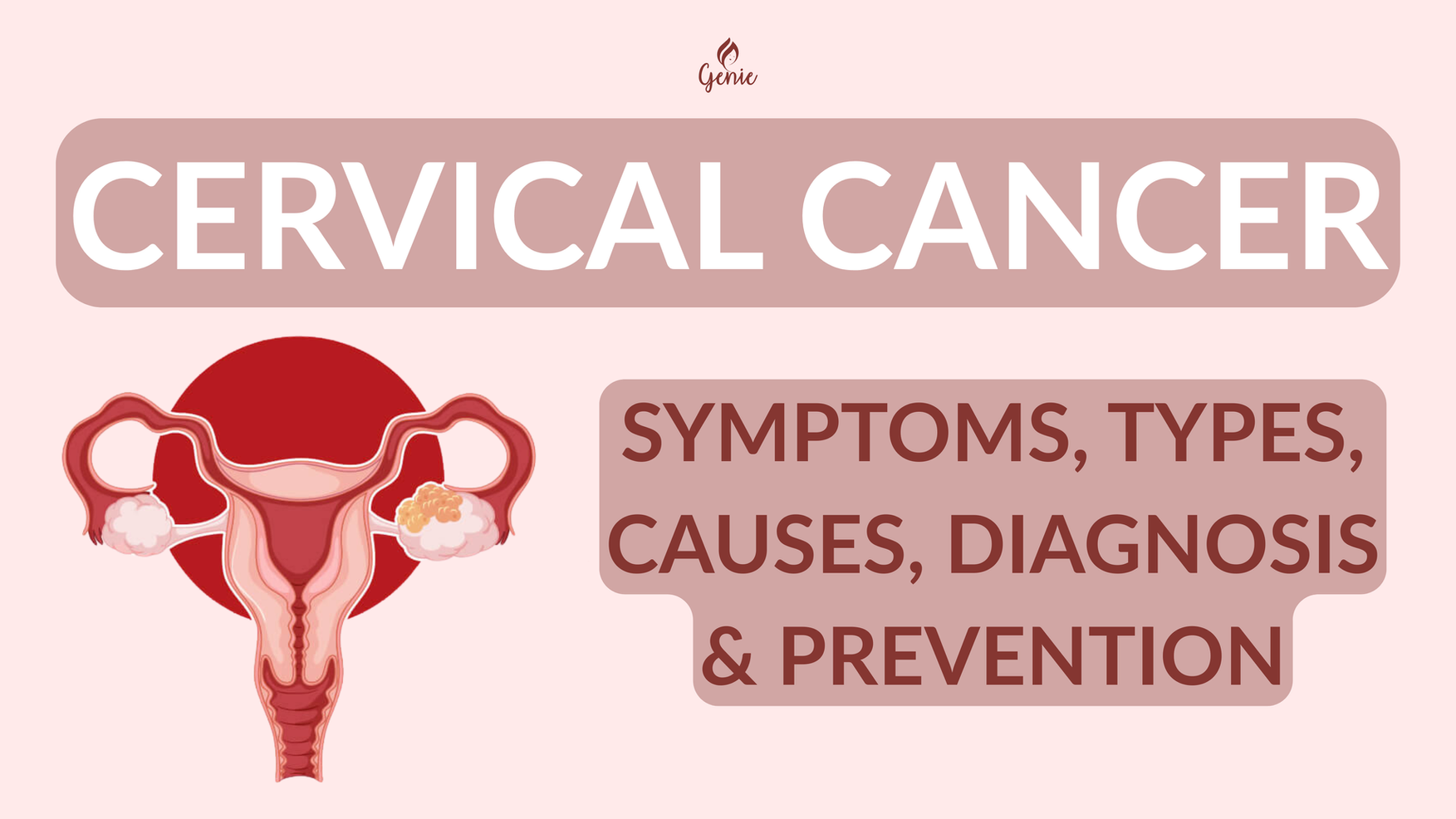
The cervix is the lower part of the uterus that opens into the vagina. It’s a small but vital organ, acting as a gateway between the uterus and the vaginal canal.
Cervical cancer begins when cells in the cervix grow uncontrollably. In most cases, this abnormal growth is triggered by a persistent infection with the Human Papilloma Virus (HPV), a very common sexually transmitted virus.
But not all cervical cancers are the same. Let’s break them down.
Types of Cervical Cancer
- Squamous Cell Carcinoma
- Accounts for about 70% of all cases.
- Originates in the squamous cells (flat cells) lining the outer surface of the cervix.
- Most often begins in the transformation zone, where squamous and glandular cells meet.
- Adenocarcinoma
- About 20–25% of cases.
- Starts in the glandular cells that produce cervical mucus, located inside the cervical canal.
- Harder to detect in Pap smears because it grows higher up in the cervix.
- Adenosquamous Carcinoma (Mixed Carcinoma)
- Contains features of both squamous cell carcinoma and adenocarcinoma.
- Tends to behave more aggressively.
- Rare Types
- Small cell cervical cancer (a neuroendocrine cancer, fast-growing).
- Sarcoma (arises from connective tissues).
- Lymphoma (starts in immune cells of the cervix).
Causes and Risk Factors
While HPV infection is the leading cause, not every woman with HPV develops cervical cancer. Additional factors can increase the risk:
- HPV infection (high-risk strains like HPV-16 and HPV-18)
- Smoking (doubles the risk)
- Weakened immunity (HIV or long-term immunosuppressive drugs)
- Multiple pregnancies (possibly linked to hormonal changes)
- Early sexual activity or multiple sexual partners
- Long-term use of birth control pills (more than 5 years)
- Poor nutrition and lack of hygiene
- Family history of cervical cancer
Symptoms of Cervical Cancer
In its early stages, cervical cancer often causes no symptom, which is why regular screening is essential.
When symptoms do appear, they may include:
- Abnormal vaginal bleeding: between periods, after sex, or after menopause.
- Unusually heavy or prolonged periods.
- Watery, foul-smelling, or blood-stained vaginal discharge.
- Pain in the pelvis or lower back.
- Pain or discomfort during intercourse.
- Swelling in the legs (in advanced stages, due to lymphatic obstruction).
How Cervical Cancer Is Diagnosed
- Pap Smear (Pap Test):
- Simple test to detect precancerous changes in cervical cells.
- Recommended every 3 years for women aged 21–65.
- HPV DNA Test:
- Detects high-risk HPV strains.
- Often done alongside a Pap smear (co-testing).
- Colposcopy:
- Visual examination of the cervix with a special magnifying device.
- Biopsy:
- Confirms whether abnormal cells are cancerous.
- Imaging Tests:
- MRI, CT scan, or PET scan may be used to check the spread (staging).
Stages of Cervical Cancer
Cervical cancer is staged based on how far it has spread:
- Stage 0 (CIN / Carcinoma in situ): Pre-cancer stage, abnormal cells only on the surface.
- Stage I: Cancer confined to the cervix.
- Stage II: Cancer has spread beyond the cervix to nearby tissues but not the pelvic wall.
- Stage III: Cancer extends to the pelvic wall, vagina, or causes kidney issues.
- Stage IV: Cancer spreads to distant organs like lungs, liver, or bones.
Survival rates:
- Stage I – over 90% 5-year survival
- Stage II – about 60–70%
- Stage III – 30–50%
- Stage IV – less than 20%
Treatment Options
Treatment depends on stage, age, and overall health. Common approaches:
- Surgery: Removal of cancerous tissue (cone biopsy, hysterectomy, or trachelectomy for women who want to preserve fertility).
- Radiation Therapy: High-energy beams to kill cancer cells.
- Chemotherapy: Drugs that kill or stop the growth of cancer cells.
- Targeted Therapy & Immunotherapy: Newer treatments that strengthen the body’s defense system or block cancer growth.
When detected early, treatment success rates are very high.
Prevention: What Women Can Do
- HPV Vaccination:
- Protects against the most dangerous HPV strains (especially HPV-16 and HPV-18).
- Recommended for girls and boys starting from age 9, ideally before becoming sexually active.
- Regular Screening:
- Pap smears and HPV testing are life-saving.
- Women should follow screening guidelines based on their age and risk level.
- Safe Sexual Practices:
- Using protection lowers HPV risk.
- Healthy Lifestyle:
- Quit smoking, eat a balanced diet, and maintain good genital hygiene.
Myths vs Facts
- Myth: Cervical cancer only affects older women.
- Fact: It can affect women of any age, especially those between 30 and 50.
- Myth: If I feel fine, I don’t need screening.
- Fact: Early cervical cancer often shows no symptoms.
- Myth: The HPV vaccine eliminates the need for Pap smears.
- Fact: Screening is still necessary because the vaccine doesn’t protect against all HPV strains.
Why This Matters in India
India contributes to nearly 1 in 4 cervical cancer deaths worldwide. The reasons:
- Lack of awareness about HPV and screening.
- Social stigma around gynecological health.
- Limited access to affordable healthcare.
By educating women, encouraging regular check-ups, and breaking menstrual taboos, we can change these numbers.
Genie Pads’ Commitment
At Genie Pads, our mission goes beyond sustainable menstrual products. We are here to build a healthier, stigma-free future. Talking openly about cervical cancer is part of that journey.
Early detection saves lives. Vaccination prevents most cases. Awareness empowers women.
✨ Your health is in your hands, let’s protect it together.
Disclaimer:
This article is intended for educational purposes only. It should not be used as a substitute for medical diagnosis or treatment. If you have concerns about your reproductive or overall health, please consult a qualified healthcare professional.